CubePlex vs DeerFlow: Personal Agent Environments and Team Agent Workspaces

DeerFlow 2.0 and CubePlex are both general-purpose agent environments. Both support long-term memory, Skills, MCP, Sandboxes, Sub-agents, and messaging integrations. Both let users research, write, code, and work with files from one conversation instead of building a separate App for every use case. Their open-source repositories are available at bytedance/deer-flow and cubeplexai/cubeplex, with usage and deployment guidance in the DeerFlow Documentation and CubePlex Documentation.
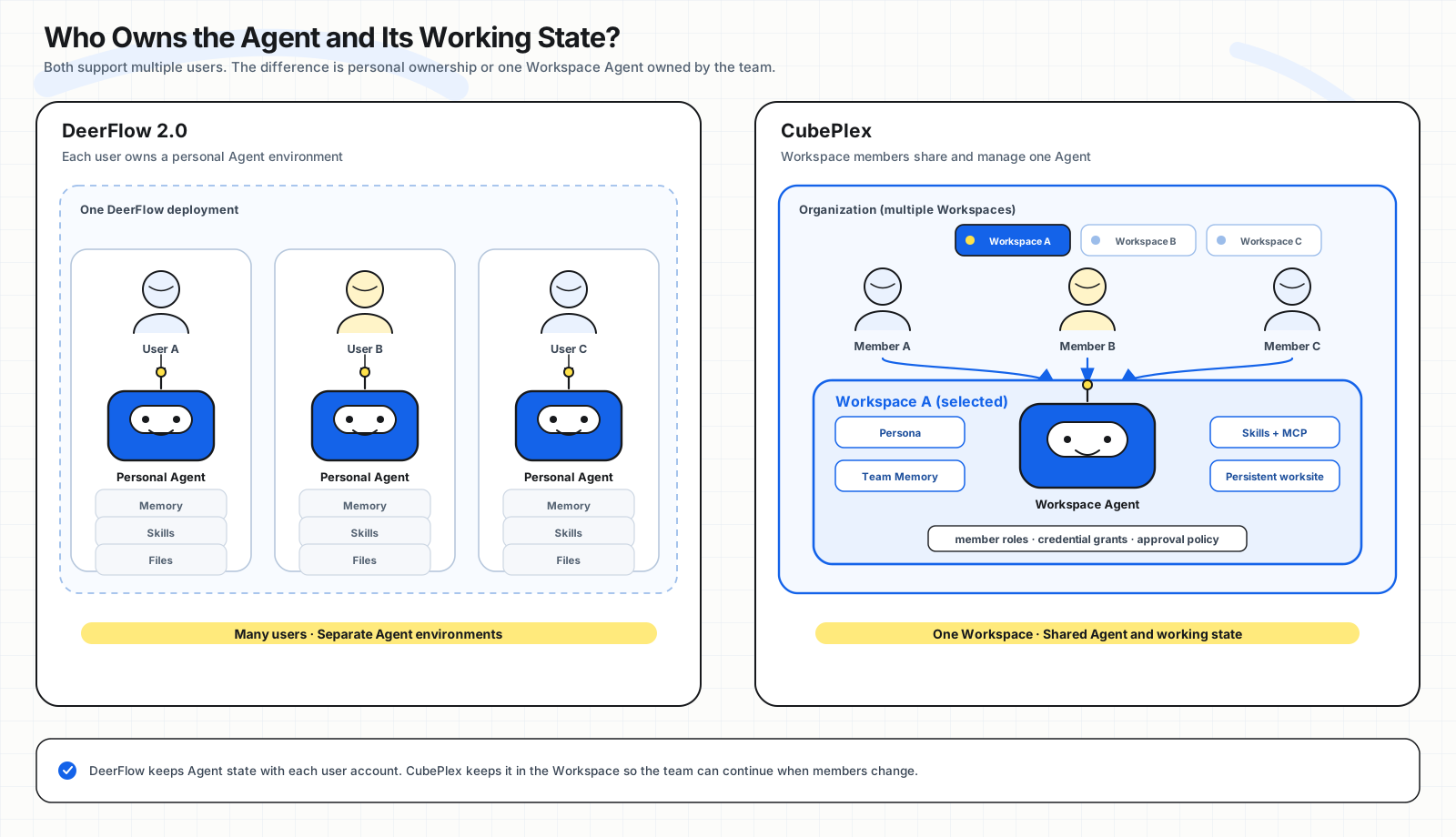
The difference starts with who owns the Agent. DeerFlow gives each user a personal Agent environment. After signing in, a user sees their own Agents, Projects, conversations, memories, Skills, and files. CubePlex places the Agent inside a Workspace. An organization creates the Workspace, adds members, configures the Agent, and decides which Skills, MCP servers, and credentials the team can use.
If OpenClaw represents a long-running desktop Agent for one person, a CubePlex Workspace is the team version of that product shape. The Agent has a stable name and way of working, knows the project context the team has confirmed, and uses team-approved Skills and MCP connections. It can work with organization accounts, project accounts, or each member's own account. Members can reach it from the web, Slack, Feishu, or other channels. Private chats, group conversations, and Topics can keep separate conversation and execution contexts, while the Agent's identity, team knowledge, and tool configuration remain with the Workspace. When a member leaves, the Agent and the team's accumulated working state remain with the team.